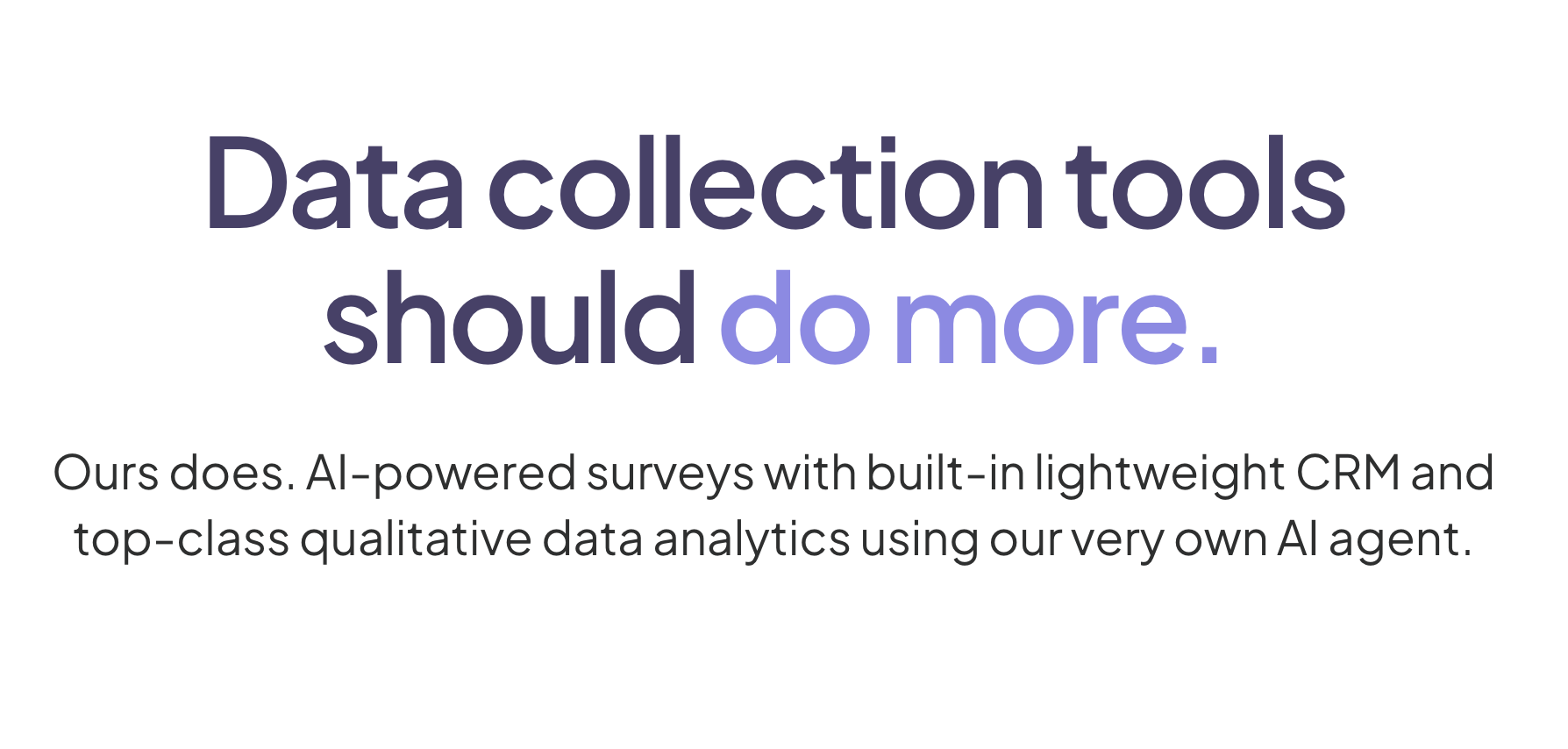
I was building a feature that extracts valence-aware codes from open-ended responses, once the feature was built and was working beautifully, I deployed it.
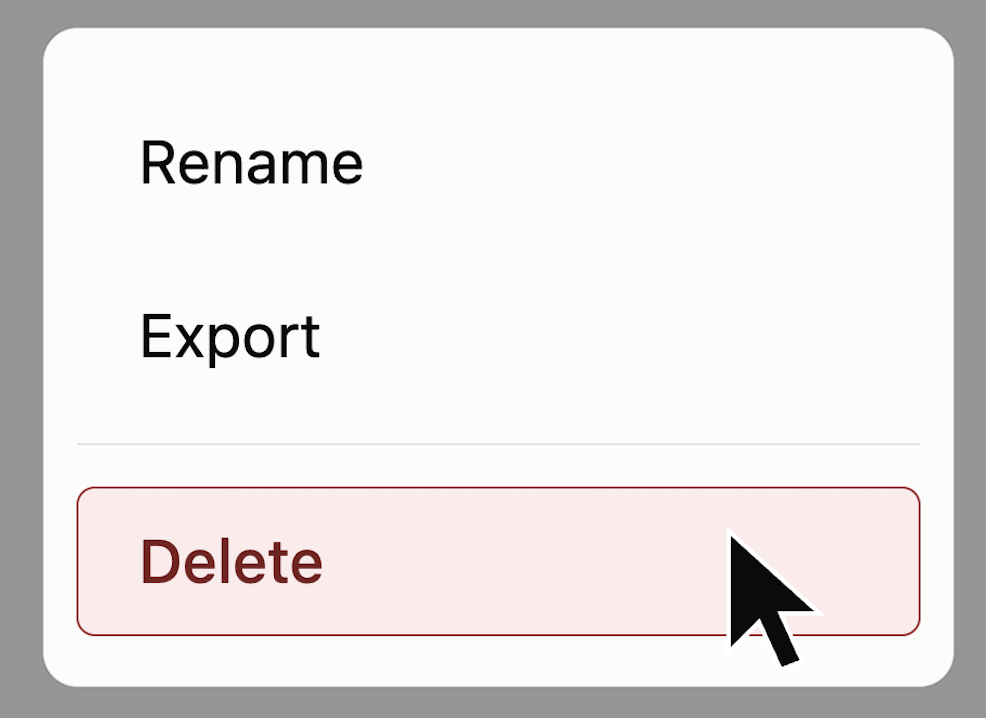
The feature was immediately used by a user but she hit a problem. Turns out, she wanted to regenerate the codes and wanted to delete the previously extracted codes, stored on an extracted dataset. But I had not implemented a delete function. The menu had a delete option but there was no functionality behind it.
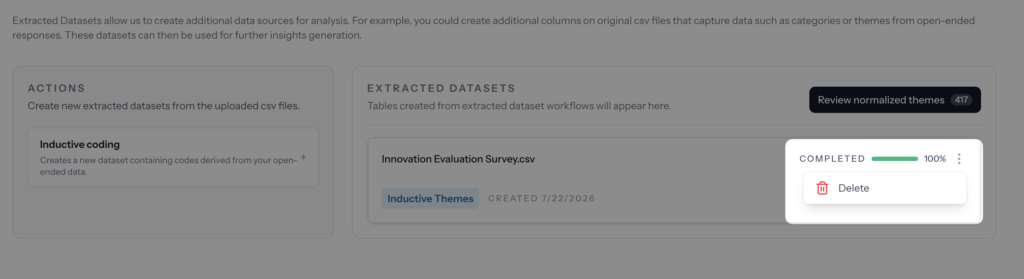
I looked at clarity recording and she attempted to delete the dataset multiple times but obviously couldn’t. How frustrating that must be!
I was kicking myself. I could’ve just spent a few extra minutes to implement it.
The impact of this was that, she just imported a new csv and regenerated the codes, but now she had one more problem to overcome:
It is now confusing to her which dataset is the one with new codes?
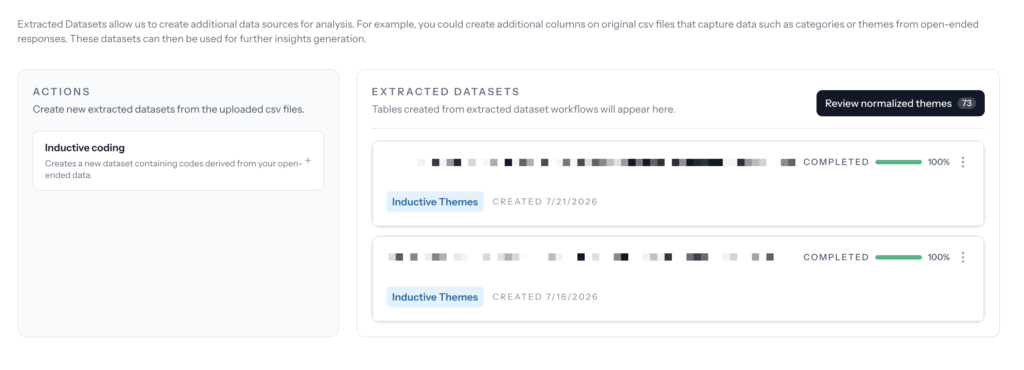
She could look at the create date, but its still effort. This also created another problem with Theme normalization feature that basically normalizes themes across multiple datasets, but in this case the datasets were duplicated, there was no multiple dataset. The situation just kept getting worse.
Not having a simple delete operation ended up creating so many more problems.
I immediately got to work, wrote a spec for delete operation explaining in detail how I needed the delete operation to be implemented. Gave the spec to AI (Opus 4.8 through visual studio code). The whole process took 20 minutes from writing the spec to deploying it on production.
Wrote an email to her apologizing, thankfully she wasn’t mad (I had set expectations that the project is a work in progress).
Lesson learned.
Now, when I build a feature, I do not ignore the last 30%. I write the spec and give work to AI, review the code after but this is helping me finish projects that actually become useful to the end user.
I believe this is the true impact of AI. It’s letting me put out work that is actually useful faster!
The last 30% in this case would’ve had such a positive impact on her experience. I am still kicking myself.